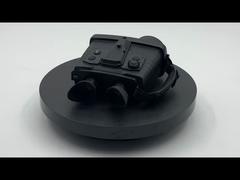
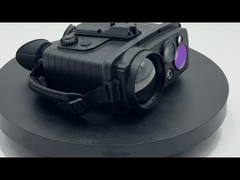
Brief: Get a guided demo that shows common workflows and troubleshooting tips for the JP NVD3000 handheld multifunctional thermal imaging telescope. This video demonstrates how to seamlessly switch between thermal and visible light imaging modes, perform laser ranging up to 6km, utilize satellite positioning for target acquisition, and leverage features like PIP display and defog for optimal day and night observation in various field conditions.
Related Product Features:
Seamlessly switch between thermal imaging and visible light observation modes with a single click.
Integrates laser ranging with a maximum range of 6km and precision within 2 meters.
Features satellite positioning and an electronic compass for accurate target data calculation.
Supports a focal length adaptation range from 50 meters to infinity for versatile observation.
Includes a Picture-in-Picture (PIP) display and guided search function after entering target coordinates.
Offers defog support and image quality enhancement in both color and black-and-white modes.
Provides relative ranging to calculate distances between multiple targets.
Designed with IP67 rating and operates in temperatures from -40°C to +55°C for rugged use.
প্রশ্নোত্তর:
What is the maximum detection range for a standing person using the thermal imaging mode?
The JP NVD3000 can detect a standing person at a range of up to 1 kilometer in thermal imaging mode.
How does the device switch between thermal and visible light imaging?
It features a 'one-key switch' function that allows instant toggling between thermal imaging and visible light observation modes for flexible use.
What is the laser ranging capability and its accuracy?
The laser rangefinder has a maximum range of 6 kilometers with a precision of ≤2 meters, operating in the human eye safety band.
Can the telescope operate in adverse weather conditions?
Yes, it has an IP67 rating for dust and water resistance and supports a defog function in visible light mode, ensuring reliable performance in various environments.